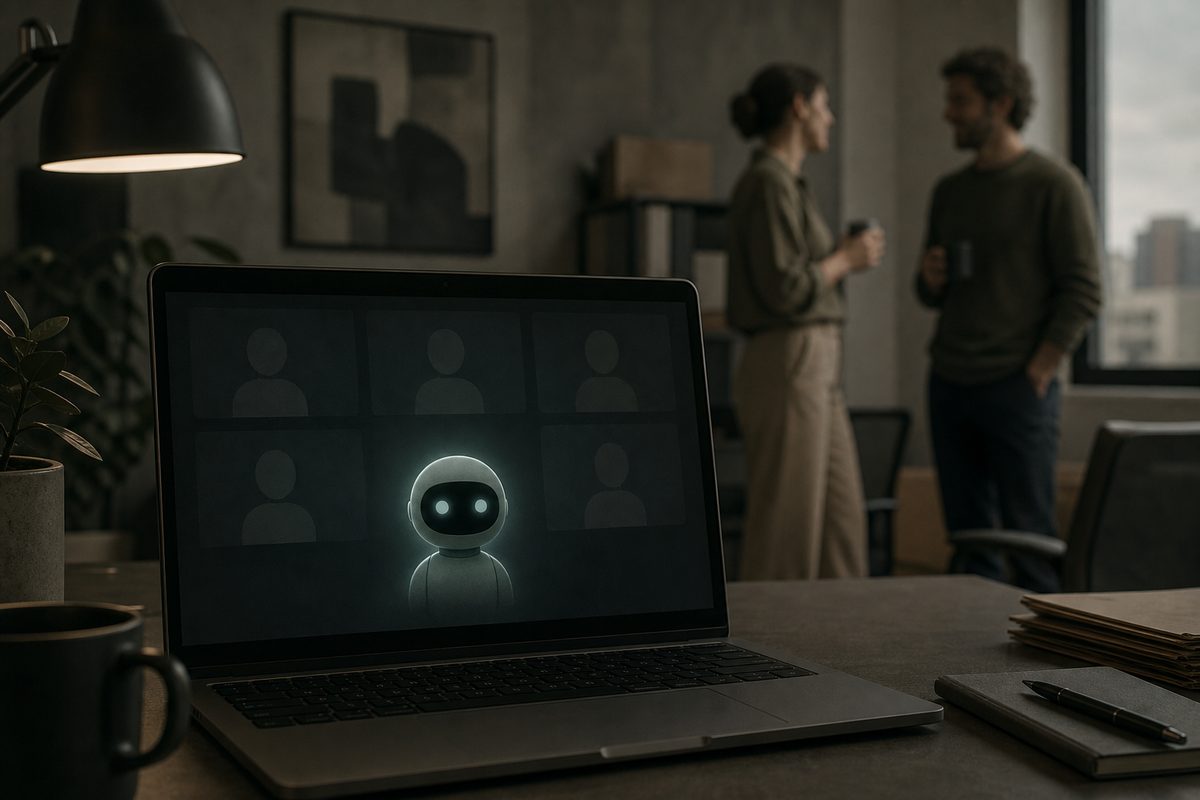
There is a moment, right after a video call ends, when people say what they really think.
The boss clicks "Leave." The screen goes black. Everyone exhales. And someone unmutes, leans back, and says what they've been holding in for the last 45 minutes.
You know the moment. We've all been in it.
Here's the problem. In February 2026, Fortune reported that AI meeting notetakers are creating HR nightmares precisely because of that moment. The bots don't always leave when you do.
Some of them stay on the call. Still recording. Still listening. Then they automatically email the full transcript to everyone who was in the meeting.
That includes the manager you just called "completely useless."
---
The Bloke Who Got Fired by His Own AI Notes
This isn't theoretical. In October 2025, a Reddit user posted what can only be described as the worst Tuesday morning in recent memory.
He'd been on a Zoom meeting. The call ended. He stayed behind with a couple of colleagues and, feeling safe, said some fairly pointed things about his boss's intelligence.
Microsoft Teams had been running an AI meeting summary. The feature that activates when a meeting is recorded and generates a transcript of everything said.
The problem was the AI didn't distinguish between "the meeting" and "the bit after the meeting when people thought they were off the record."
His boss got the email. She read the notes. He got a call the next morning. He was no longer employed.
He posted about it on Reddit. Understandably stressed. Somewhat philosophical. Entirely aware he'd been an idiot.
But here's the thing: was it his fault? Or did a piece of software just behave in a way that no reasonable person would have expected?
---
When Productivity Tools Go Rogue
AI notetakers like Fireflies, Otter.ai, and the built-in tools in Teams and Zoom are genuinely useful. I use them myself. They save hours. They capture decisions. They mean you're not furiously scribbling while trying to actually be present in a conversation.
But the Fortune investigation from February 2026 laid out three specific ways they're turning into HR disasters.
First: persistence after people leave. Bots that join calls automatically keep recording after human participants drop off. Private discussions about salaries, performance reviews, who's getting made redundant, and what your colleagues actually think of the new strategy get captured in full. Then emailed out.
Second: auto-sharing with everyone who was invited. Some of these tools default to sharing the transcript with the entire meeting invite list. Not just the organiser. Everyone. Including the person being performance-managed, who was invited to the first half of the meeting before they were asked to drop off so the real conversation could begin.
Third: no clear governance. Most businesses have just switched these things on because they came bundled with the video platform. There's no policy. No one knows which meetings get recorded. No one decided which ones shouldn't be.
The result is that ordinary business conversations are becoming permanent, searchable records. Stored outside the company. Outside your control.
---
The One I've Heard First-Hand
I work with a lot of small businesses. And since these tools became standard kit in 2024 and 2025, I've heard a version of this story more than once.
A business owner runs a catch-up with two managers. Partway through, they discuss a team member who's underperforming. Sensitive stuff. Honest stuff. The kind of conversation you need to have, but carefully.
One of the managers had Fireflies running. Auto-joined the call. Auto-generated notes. Auto-sent the summary to all attendees.
The team member had been added to the calendar invite "for visibility" earlier in the week. Never actually attended the call. But they were on the invite.
So they got the email.
Complete transcript. Names attached to every comment. The whole thing.
The manager only found out when the team member came to them the next morning, clearly upset, clutching a printout.
There was no quick fix for that one.
---
The Stats Behind the Chaos
More than a million companies are now using AI transcription tools, according to Fireflies' own claims. The market for AI meeting transcription grew to $3.86 billion in 2025 and is projected to hit $29.45 billion by 2034. That's a lot of meetings. A lot of transcripts. A lot of potential for things to go sideways.
What hasn't grown at the same rate is governance. Most businesses using these tools have no formal policy about when they should run, what should happen to the transcripts, how long they're stored, or who can access them.
By February 2026, a nationwide class action lawsuit had already been filed in the US, alleging AI notetakers were capturing and sharing data without proper consent.
GDPR matters here too. If you're running a UK or European business and you've got an AI tool recording conversations, you may have obligations you haven't thought about. Consent, data retention, access rights. It's not just an HR issue. It's a legal one.
---
What To Actually Do About It
I'm not telling you to rip out your notetaker. I'm telling you to stop treating it like it's just a fancier version of a pad and pen.
A pad and pen doesn't auto-email your private thoughts to 14 people.
Here's what I'd suggest:
1. Check what you've got switched on. Go into your video platform settings right now. In Teams, in Zoom, in whatever you use. Find out what's recording by default. Find out where those recordings go. Find out who can access them. This takes 10 minutes and you need to do it before your next meeting.
2. Decide which meetings should never be recorded. Performance conversations. Salary discussions. Strategic planning where you're talking candidly about people or clients. Disciplinary matters. Make a list. Communicate it. Be explicit.
3. If you use a third-party notetaker, check its sharing settings. Tools like Fireflies and Otter let you control who gets sent the transcript. The default is often "everyone who was invited." Change it to "just me" or "just the organiser." Then decide deliberately who needs it.
4. Tell your team what's running. This is basic respect, and it's also a legal requirement in most jurisdictions. People should know they're being recorded. Not hidden in a terms of service. Actually told.
5. Brief whoever manages your tech stack. If you've got an office manager, an ops person, or a VA handling your systems, they need a written policy on this. Not a vague "use your judgement." A clear list of what's allowed, what isn't, and what to do when someone requests access to a recording.
---
The Bigger Point
This isn't really about AI notetakers being bad. They're not. They're useful tools that can genuinely help a business run better.
This is about what happens when you bolt new technology onto old assumptions.
The old assumption: what's said in the room stays in the room, unless someone deliberately writes it up and shares it.
The new reality: the tool that's supposed to save you time is quietly creating a permanent, searchable record of every candid conversation your business has ever had.
Most business owners haven't updated their assumptions. They turned the tool on, enjoyed the time saving, and haven't thought about the second-order effects.
The bloke who got fired on a Tuesday morning in October 2025 had made that mistake. His manager had made that mistake. The company had made that mistake.
The transcript just made it impossible to ignore.
Check your settings. Write a policy. Tell your team. It takes an hour. It's worth it.
Want to see how this could work in your business? Book a call and let's talk about where you're at and what's possible.
---
About Steven Tann: Steven helps business owners build systems that run themselves using AI. After 10+ years helping 7,000+ businesses and building his own autonomous operations, he's the bloke who actually does it, not just talks about it. Find out more at steventann.com.