There's a phrase that stopped me cold when I first heard it.
"I don't run a cleaning business. I run an admin business that happens to clean things."
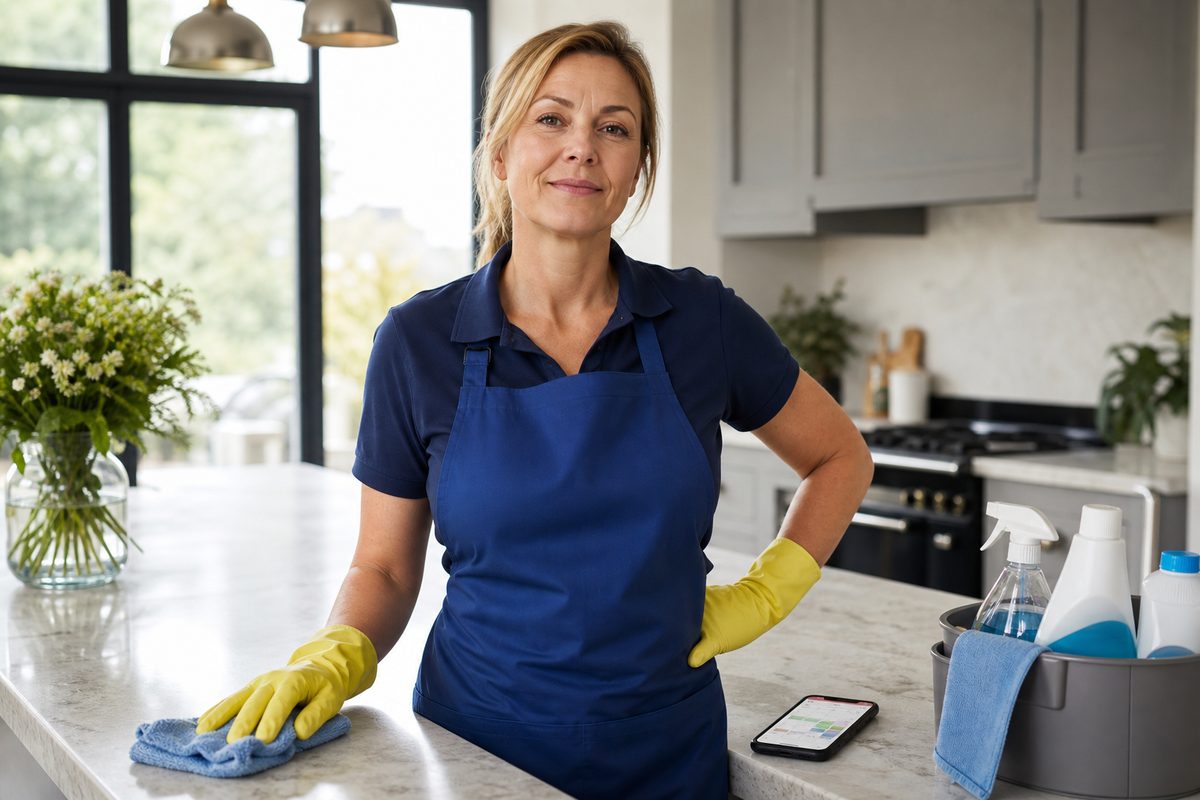
That came from Karen, a cleaning company owner from Stockport. She'd been in the game for eleven years. Started with a mop, a bucket, and a handful of clients she'd picked up through word of mouth. By the time I met her, she had twelve staff, eighty-three regular clients, and a WhatsApp group that made her feel physically ill every time she opened it.
She wasn't struggling with the cleaning. She was drowning in everything around it.
The Real Problem Nobody Talks About
Here's what running a small cleaning business actually looks like on the inside.
Monday morning. Karen's phone goes before she's finished her first brew. One of the staff has called in sick. That's three clients who need to be redistributed across a team that's already stretched. She spends the next ninety minutes on the phone, juggling schedules, texting staff, and fielding a panicked call from a client whose cleaner hasn't shown up.
Meanwhile, there are four new enquiries sitting in her inbox from the weekend. She'll get to those when she can.
She won't get to those until Tuesday afternoon.
By which point, two of them have already booked someone else.
This is not a rare bad day. This is Tuesday through Friday as well.
According to data from UK cleaning industry specialists, most cleaning business owners spend twenty to thirty hours a week on admin. That's before they've answered a single client question, chased a single invoice, or done a single quote. That's half the working week, minimum, just keeping the plates spinning.
Karen had hit the ceiling. Not because she wasn't good at what she did. Because the system she was running on, which was essentially her own brain, her phone, and a spreadsheet, had no room left in it.
What She Actually Changed
Karen didn't hire an office manager. She couldn't justify the cost at the time, and frankly, she wasn't sure it would solve the right problems.
What she did instead was map out every task that had a pattern to it.
Client booking confirmations. That's a pattern. Always sent twenty-four hours before. Always the same information. Always needed. She automated it. Done.
Arrival notifications. Another pattern. Clients always asked "when is my cleaner coming?" The answer was always the same type of information. She set up automated messages that sent when the staff member left for their job. Done.
Payment reminders. Pattern. Client owes money, hasn't paid by a certain day, gets a polite reminder. She was doing this manually every single week for a dozen clients. She automated the whole sequence. Done.
New enquiry follow-up. This was the one that hurt the most. Every weekend enquiry was a potential client who'd filled in her website form, and Karen would see it Monday, get distracted, and chase it Tuesday or later. The research is blunt about this: if you don't respond to a new lead within the first two hours, your chance of converting them drops off a cliff. She set up an automated response that fired within sixty seconds, acknowledged the enquiry, asked a few qualifying questions about property size and frequency, and booked a callback at a time that suited them.
Not a chatbot. Not some clunky robot. A simple, warm, well-written message that sounded like her, went out instantly, and kept the conversation going while she was elbow-deep in a client job.
The last piece was the one that changed her mornings: staff scheduling. When someone called in sick, instead of Karen becoming a human Tetris puzzle, the system would look at available staff based on their location and client preferences, flag the gap, suggest the cover, and notify the relevant staff member, all without Karen having to mediate between five different WhatsApp threads.
The Numbers After Ninety Days
Karen tracked everything. She's that kind of person.
Admin time per week, before: twenty-two hours. After: seven hours.
That's fifteen hours back every single week. More than two full working days. Not saved by working faster. Saved by not doing those tasks manually anymore.
No-show rate, before: roughly one in eight appointments had some kind of issue, a client complaint, a missed notification, a scheduling error. After: down by more than half.
Weekend enquiries converted, before: maybe one in five, because the follow-up was always late. After: closer to one in two, because the response was instant.
And the invoice chasing. This one surprised her. She'd been writing off small amounts regularly, clients who just didn't pay without a nudge, and Karen didn't have time to nudge everyone. Once she automated payment reminders at day seven, day fourteen, and day twenty-one, she started recovering somewhere between eight hundred and twelve hundred pounds a month that had previously just disappeared.
She didn't add a single new client in those ninety days. Same revenue base. She just stopped losing the money she was already owed and stopped losing the time she was already spending.
Why Cleaning Businesses Are Perfect for This
I've worked with businesses in a lot of different sectors. Cleaning is one of the best fits for automation that I've seen, and here's why.
Everything is predictable. Clients book regular slots. Jobs happen on a schedule. Payments are due on a cycle. Staff have consistent availability. Reviews need requesting after every clean. Reminders go out before every appointment.
When you have that much repetition and pattern in your operations, you're essentially doing the computer's job for it. You're running a human-powered automation system, and it's exhausting.
The UK cleaning industry has 350,000-plus businesses and a sector turnover of around £24 billion a year. Yet industry data suggests 68% of cleaning businesses are still managing their finances manually or on spreadsheets, and the average sole trader cleaning business is over-paying on tax by roughly £2,900 a year simply from not tracking expenses properly.
The administrative gap is enormous. And it's entirely fixable.
The technology involved is not advanced. Karen isn't using anything that requires a tech team or a big budget. She's using automation tools that connect her booking enquiries to her calendar, her calendar to her client communications, and her payment system to her reminder sequences. The whole thing costs her less per month than she was losing on a single un-chased invoice.
The Bit People Miss
Whenever I talk about automation with small business owners, someone in the room says the same thing.
"Yeah, but my clients like dealing with me personally."
Karen said that too.
Here's what she found: the automated stuff isn't the personal stuff. Nobody wants a personal phone call to confirm their appointment time. Nobody wants Karen to personally call them to say the cleaner is on the way. They just want to know. The automated message does that better than Karen could, because it's instant, it's consistent, and it never forgets.
What clients wanted personal attention for, the things that mattered, they still got Karen. When there was a problem. When they needed to change something significant. When they wanted to book a one-off spring clean for a specific reason. Those conversations still happened.
But the fifty "when is she coming" messages a week? Gone. The Monday morning schedule reshuffle? Mostly handled before she finished her brew. The payment chasing that felt awkward and personal and time-consuming? Automated, polite, and effective.
She gets to be present for the conversations that require a human. The system handles the ones that don't.
That's the point.
What You Can Take Away Right Now
If you run any kind of service business, cleaning or otherwise, ask yourself this question.
What am I doing this week that I did identically last week?
Appointment confirmations. Payment reminders. Enquiry responses. Scheduling notifications. Review requests.
Every single one of those is a candidate for automation. Not because you're lazy. Because your time is worth more than manually sending the same message for the thousandth time.
Karen still loves her business. She still gets up Monday morning and does what she does. But now she's running a cleaning business, not an admin business that happens to clean things.
That distinction matters more than any particular tool or system she uses.
---
If you want to talk this through with people who are actually doing it, come join us in The Autonomous Business on Facebook. No gurus, no fluff, just real conversations with business owners building systems that run themselves.
---
About Steven Tann: Steven helps business owners build systems that run themselves using AI. After 10+ years helping 7,000+ businesses and building his own autonomous operations, he's the bloke who actually does it, not just talks about it. Find out more at steventann.com.