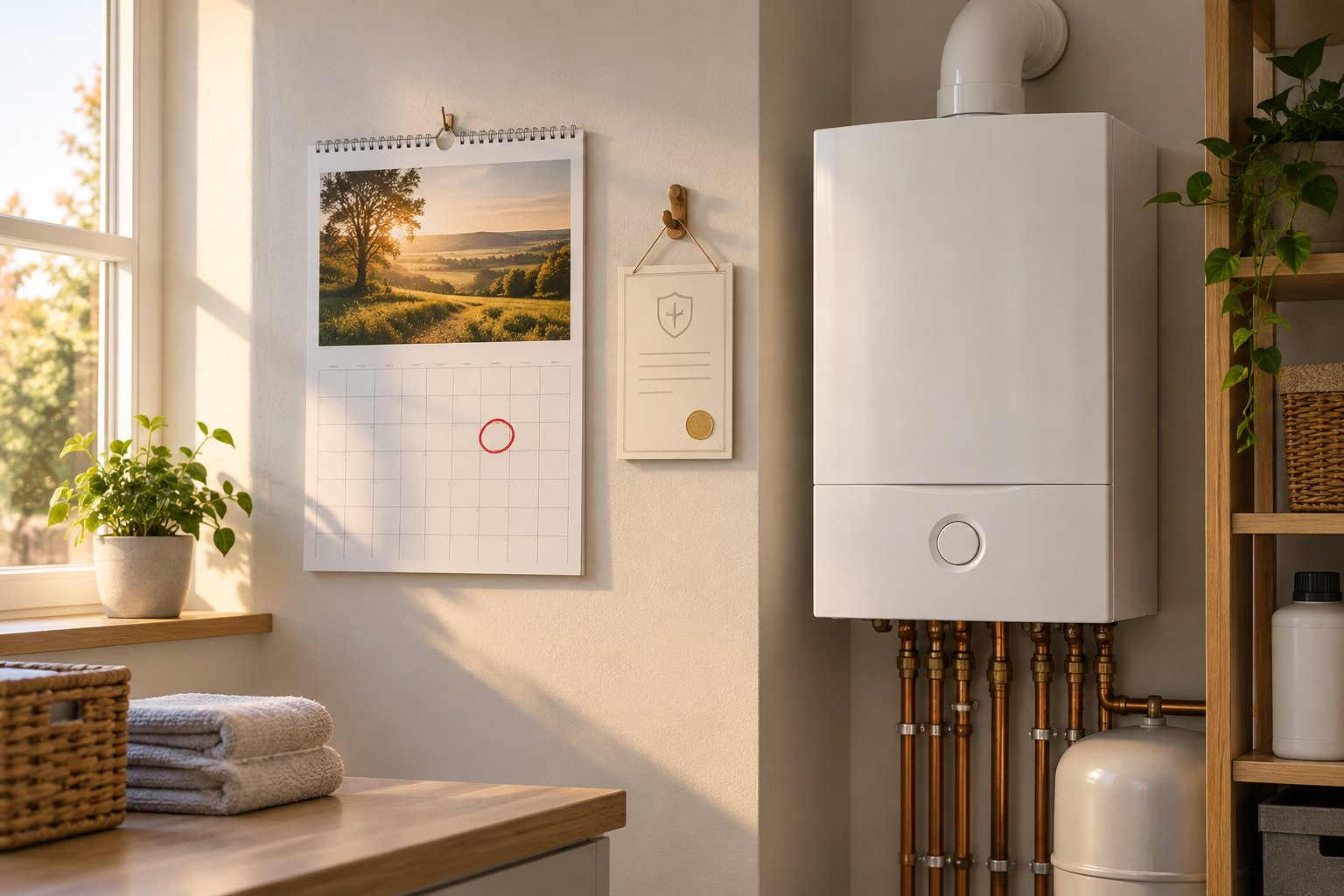
A bloke fits a new boiler in March. Good job, tidy, customer's happy, invoice paid inside a week. The paperwork says there's a twelve month guarantee, so everyone feels warm about it.
Fast forward to the following February. The boiler is eleven months old. The customer has no idea when it was installed, can't find the paperwork, and the tradie has done forty jobs since and couldn't tell you the address without checking. Then the boiler starts making a noise. The customer googles "boiler engineer near me" and rings whoever comes up first.
That's not a quality problem. The work was fine. It's a memory problem. And it's costing you money twice.
The two ways a guarantee leaks cash
Leak one: the claim you didn't see coming. Guarantees expire on a date. Customers know roughly when, you don't. So the claim arrives the week before expiry, at the worst moment, as a surprise, and you drop whatever you're doing to deal with it. A small fault found at month nine is a ten minute fix. The same fault found at month twelve, after it's chewed something else up, is a half day and a grumpy customer.
Leak two: the follow-on work you never get asked for. The end of a guarantee is the single most natural moment to say "want us to look after this for you?" Annual service, extended cover, a maintenance plan, the matching job next door. The customer is already thinking about the thing. Nobody's asked.
Most small businesses I talk to handle both leaks the same way. They don't. The guarantee sits on a PDF in an email somewhere, and the follow-up lives in somebody's head until that somebody has a busy fortnight.
What this looks like in numbers
Let's do the maths with made-up but sensible figures, so you can swap in your own.
Say you complete 150 jobs a year that carry a guarantee. Say a check-in message before expiry gets you an annual service booking from one customer in ten. That's fifteen bookings. Say a service is worth £90 to you. That's £1,350 a year from a message you didn't write by hand.
Now the other side. Say a fault caught early costs you thirty minutes and one caught late costs you three hours. If just ten of those 150 jobs shift from late to early, that's twenty-five hours back. At a tenner an hour that's pretty cheap. At what your time is actually worth, it's more than that.
Those are illustrative numbers, not a study. Your conversion rate might be lower, your service might be worth more. The point is the shape: a tiny recurring cost against a modest but repeatable return, and none of it needs you to remember anything.
The fix: one date, three messages
You don't need an AI tool to start. You need one date and three messages.
1. Capture the install date at the point of sale. This is the bit everyone skips and the whole thing hangs off it. When you invoice, or when the job is marked complete, record the job date and the guarantee length in your CRM, your job software, or even a spreadsheet. One extra field. If you can't get this field reliably, nothing downstream works, so fix this first.
2. Set the trigger for one month before expiry. The automation looks at that date and when it's thirty days out, it sends a short message to the customer. Plain, human, no jargon. Something like:
"Hi Sam, quick one. The guarantee on your boiler runs out next month. If anything's making a noise or doesn't feel right, tell us this week and we'll sort it while it's still covered. And if all's well, we can book your annual service in while we're at it."
That one message does both jobs. It catches the early fault and it asks for the follow-on work, at the exact moment the customer is already thinking about it.
3. Add a nudge and a thank you. If they don't reply, send a short reminder a week later. If they book, send the confirmation and put the job in the diary automatically. After the service, ask for a review while the customer still has a warm opinion of you. That's the whole sequence.
Three messages. One date. It's a morning's setup, then it runs without you.
Where AI actually earns its place
The date-trigger part is old fashioned automation. Any decent CRM does it. Where an AI model helps is the bits around the edges:
- Replies. Customers don't answer in neat yes/no. They write "can you do Thursday after 3 but not the 14th" or "it's been a bit loud tbh". An AI assistant can read that, work out which it is, and either book the slot or flag it to you as a possible fault. That's far better than a dumb auto-reply.
- Triage. "Loud" might be nothing, or it might be the thing that becomes a claim. Have the AI sort the replies into "book a service", "possible fault, call them" and "all fine". You only touch the middle pile.
- Tone. If your customers are retired couples, the message sounds different to one sent to a landlord with forty properties. One prompt, two templates.
Keep a human in the loop for anything that looks like a fault. You want the AI sorting and booking, not deciding what's covered. That's a judgement call that belongs to you, and the wording of your actual guarantee matters, so check what it promises before you automate any statement about it.
Mistakes I see every time
Messaging everyone the same way. A customer with a £90 repair job and a customer with a £9,000 install are not the same conversation. Segment by job value, at least into two groups.
Making the message sound like a sales pitch. Lead with the guarantee and the help. The service offer comes second. If it reads like an advert, it gets deleted, and you've burned the goodwill you were trying to use.
Forgetting the opt-out. If you're sending marketing-style messages by email or text, check you're allowed to and give people an easy way to stop. A guarantee reminder is service information, but the service upsell inside it can tip it into marketing. Keep it light and keep the opt-out visible.
Never checking it works. Run it on five old jobs first. Read what goes out. Check the dates are right and the names are spelt properly. A reminder that says "Hi [FIRSTNAME]" is worse than no reminder.
Start small this week
Don't build the lot. Pick the last ten jobs that still carry a guarantee. Find the dates. Put them in a sheet. Put reminders in your calendar for a month before each one. Send the message by hand for a month and see how many people reply.
If it works, and it usually does, then you automate it. If it doesn't, you've lost an hour and learned your customers don't care, which is useful too.
The guarantee was always a promise. The follow-up is what makes it worth something to both sides.
Want to try this yourself? Grab the free AI Setup Kit. 77 plug-and-play skills for content, sales, marketing, and operations. Works with Viktor, Claude, or ChatGPT. No course, no tool to configure, just markdown files and your AI.
Brewed by Steven, poured by Viktor
About Steven Tann: Steven helps business owners build systems that run themselves using AI. After 10+ years helping 7,000+ businesses and building his own autonomous operations, he's the bloke who actually does it, not just talks about it. Find out more at steventann.com.